
GK
Travelling in the Past: A Journey Through Time and Culture


Travelling in the Past: A Journey Through Time and Culture
Have you ever wished you could walk through the streets of ancient Rome, witness the construction of the Great Wall of China, or dine in an 18th-century Parisian café? Travelling in the past is no longer just a fantasy for sci-fi lovers or history buffs. With growing interest in immersive experiences, travelling in the past has become one of the hottest trends in cultural and educational tourism.
In this blog post, we’ll explore what travelling in the past means, how it’s shaping modern travel experiences, and how you can become a time traveler in your own right—without a time machine.
What is Travelling in the Past?
Travelling in the past refers to the practice of exploring historical sites, re-enactments, and cultural heritage locations that give you a feel of stepping back in time. It’s an experience that combines historical travel, interactive learning, and storytelling.
Whether you’re visiting ancient ruins or participating in medieval festivals, the goal is the same: to relive moments from history and understand the world through the eyes of those who came before us.
Why Travelling in the Past is Gaining Popularity
In the age of fast-paced digital lifestyles, many people are turning to travelling in the past for deeper, more meaningful experiences. Unlike modern city tours, historical journeys allow you to connect emotionally and intellectually with different time periods.
From ancient Egypt to Renaissance Italy, these experiences are enriched with storytelling, guided tours, and cultural immersion that bring history to life. This form of time travel tourism is especially popular among families, educators, and solo travelers looking for inspiration and insight.
Top Destinations for Travelling in the Past
Here are some must-visit places that offer incredible travelling in the past experiences:
Pompeii, Italy – Step into a perfectly preserved Roman city frozen in time.
Machu Picchu, Peru – Explore the ancient Inca civilization hidden in the Andes.
Kyoto, Japan – Discover temples, tea houses, and geisha culture from centuries ago.
Petra, Jordan – Walk through a stunning city carved into rose-red stone cliffs.
Colonial Williamsburg, USA – A fully immersive time travel tourism experience with actors and historic reenactments.
These locations are ideal for anyone interested in historical travel, combining education with adventure.
Modern Ways to Experience Travelling in the Past
You don’t always have to hop on a plane. With new technologies and creative travel packages, you can enjoy travelling in the past through:
Virtual Reality Tours: VR headsets can transport you to ancient Rome or a Viking village.
Historical Reenactment Events: Join a Renaissance fair or a Civil War reenactment to live the experience.
Themed Hotels and Resorts: Stay in castles, heritage homes, or period-style hotels that reflect the past.
These modern tools make time travel tourism accessible for everyone, even from the comfort of home.
Tips for Planning Your Historical Travel Adventure
If you’re ready to dive into travelling in the past, here are a few tips to get started:
Do your research – Understand the history of the place you’re visiting.
Choose authentic experiences – Look for certified guides and programs that emphasize real stories and facts.
Be respectful – Remember that many sites are sacred or of great cultural importance.
Combining historical travel with ethical tourism ensures a more rewarding journey.
Conclusion: Why Travelling in the Past is the Future of Tourism
Travelling in the past is more than just visiting old buildings. It’s about connecting with humanity’s shared heritage and discovering how far we’ve come. From ancient destinations to historical reenactments, every experience brings us closer to understanding the world.
With the rise of time travel tourism and a growing interest in historical travel, now is the perfect time to plan your journey into the past. Whether you explore ancient destinations in person or through digital platforms, travelling in the past promises a unique and unforgettable adventure.
Description (for SEO)
Explore the wonders of travelling in the past with immersive historical travel experiences, ancient destinations, and time travel tourism tips to inspire your next journey.



How Do Satellites Stay in Orbit? A Complete Guide
When we look up at the night sky, we often wonder, how do satellites stay in orbit? These human-made marvels play a crucial role in communication, weather forecasting, navigation, and scientific research. But the science behind their motion often sparks curiosity. In this blog, we will explore how do satellites stay in orbit, how do satellites move, how do satellites work, and how do satellites orbit the Earth in a simple, easy-to-understand way.
The Basics: How Do Satellites Stay in Orbit?
To answer the big question—how do satellites stay in orbit—we need to understand gravity and velocity. A satellite is launched into space with enough speed to counteract the pull of Earth’s gravity. If it moves too slowly, it will fall back to Earth. If it moves too quickly, it will escape Earth’s gravity. The perfect balance between speed and gravity is what allows satellites to remain in orbit.
This balance is why the question of how do satellites stay in orbit fascinates scientists and space enthusiasts alike. Simply put, satellites are constantly “falling” toward Earth due to gravity, but because they are moving sideways so quickly, they keep missing Earth, creating a continuous orbit.
How Do Satellites Move in Space?
Now that we understand how do satellites stay in orbit, another question arises: how do satellites move?
Satellites move in space because of the momentum given to them during launch. Once in orbit, they don’t need engines running continuously to keep moving. Instead, they rely on the laws of physics—specifically Newton’s First Law of Motion, which states that an object in motion stays in motion unless acted upon by an external force.
So, how do satellites move? They circle Earth at extremely high speeds—often thousands of kilometers per hour. This movement ensures that they maintain their orbit while serving their purposes, such as GPS navigation, weather monitoring, or internet connectivity.
How Do Satellites Work?
Understanding how do satellites work helps us appreciate their role in daily life.
Satellites are equipped with communication systems, sensors, solar panels, and antennas. Depending on their type, they collect data, send signals, or relay communication. For example, weather satellites take pictures of cloud formations, while GPS satellites send signals that help your phone calculate your location.
So, how do satellites work in practice? They receive signals from Earth, process them, and send them back, sometimes bouncing information between multiple satellites to ensure coverage across the globe. Without satellites, modern life—from weather reports to smartphone maps—would look very different.
How Do Satellites Orbit the Earth?
Another important concept is how do satellites orbit the Earth. When a satellite is launched, it’s placed into a specific orbit depending on its mission.
So, how do satellites orbit the Earth effectively? They follow paths determined by their speed, altitude, and Earth’s gravitational pull. Low Earth orbit (LEO) satellites, for example, orbit closer to Earth and are used for imaging and communication. Geostationary satellites orbit much farther away, appearing “fixed” over one point of Earth, which makes them perfect for weather and television broadcasting.
Understanding how do satellites orbit the Earth reveals the planning and precision behind every satellite launch. Engineers calculate exact speeds and angles to ensure satellites serve their purpose without drifting off course.
Everyday Examples of Satellites in Action
Communication satellites: Deliver TV, radio, and internet services.
Weather satellites: Help meteorologists forecast storms and track climate patterns.
GPS satellites: Guide airplanes, ships, cars, and smartphones.
Scientific satellites: Observe Earth, study space, and provide crucial research data.
In all these cases, the core principles of how do satellites stay in orbit, how do satellites move, how do satellites work, and how do satellites orbit the Earth are at play.
Why Understanding Satellites Matters
Knowing how do satellites stay in orbit isn’t just for space scientists—it also helps us appreciate the technology we use every day. Whether you’re checking weather updates, navigating with GPS, or streaming a live event, satellites are silently working above us.
Understanding how do satellites move gives insight into their reliability. Recognizing how do satellites work highlights their contribution to global communication. And exploring how do satellites orbit the Earth shows how human innovation has harnessed natural forces to achieve incredible technological feats.
Final Thoughts
So, how do satellites stay in orbit? They balance the pull of Earth’s gravity with their speed, creating a stable path around our planet.
How do satellites move? By maintaining momentum once launched into space.
How do satellites work? Through advanced systems that collect and transmit signals and data.
And finally, how do satellites orbit the Earth? By following carefully calculated paths that match their mission requirements.
Satellites are not just objects floating in the sky—they are the backbone of our modern, connected world.

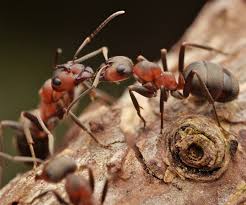
Why Do Ants Communicate? Secrets of Their Tiny World
When you see a line of ants moving in perfect coordination, you might wonder: Why do ants communicate so effectively compared to other insects? Ants are social creatures that thrive in colonies, and their survival depends on constant communication. Understanding why do ants communicate opens up fascinating insights into nature’s most cooperative societies.
Why Do Ants Communicate?
Ants live in large colonies where cooperation is key. From finding food to protecting their queen, ants rely on teamwork. So, why do ants communicate so much? The answer is simple: they need to share vital information. Without communication, their organized system would collapse.
But why do ants talk to each other in ways humans can’t easily see? They use chemical signals, body language, and even touch. These methods help ants build trails, warn others about danger, and decide who does what job in the colony.
What Do Ants Communicate With Each Other?
One major question scientists ask is: what do ants communicate with each other? Ants mainly communicate through pheromones—special chemicals they release into the air or onto the ground. For example, when a worker ant finds food, it leaves a scent trail so others can follow.
Another answer to what do ants communicate with each other includes danger signals. If predators threaten the colony, ants release alarm pheromones, and instantly, the army of ants prepares to defend their home.
So, why do ants communicate? Because sharing food sources, defense strategies, and even instructions about colony building is essential to their survival.
Why Do Ants Talk to Each Other?
If you’ve ever watched ants closely, you might think: why do ants talk to each other when they can simply work on their own? The truth is, no single ant could survive long without help. Ant colonies are like super-organisms, and each ant is just one small part of the larger system.
Scientists discovered that ants talk to each other not only with chemicals but also by tapping their antennae. This is how they pass on messages about food, danger, or even grooming needs.
So, why do ants talk to each other so often? Because it keeps the colony strong, united, and efficient.
What Do Ants Talk About?
Have you ever wondered: what do ants talk about during their busy lives? While ants don’t talk the way humans do, their signals carry important “conversations.” For example, what do ants talk about includes:
Food locations
Predators or threats
Which direction to travel
Nest maintenance
Caring for larvae and the queen
So, if you ask, what do ants talk about, the answer is survival and teamwork. Every message strengthens the colony’s unity.
What Do Ants Use to Communicate?
Now let’s answer another vital question: what do ants use to communicate? The main tools are:
Pheromones – chemical signals to mark paths and warn of threats.
Antennae tapping – a form of “touch language.”
Vibrations – some ants can produce sound by rubbing body parts, known as stridulation.
Therefore, what do ants use to communicate is not sound or words like humans, but advanced biological methods designed for efficiency.
By learning what do ants use to communicate, we realize why these tiny insects can achieve such large-scale cooperation.
Ants Talk to Each Other Constantly
It’s fascinating how often ants talk to each other while working. Every ant has a job, and constant interaction keeps the whole colony in sync. Imagine if thousands of ants worked silently, without signals—it would be chaos.
Because ants talk to each other using multiple strategies, they can adapt quickly to challenges like floods, food shortages, or predator attacks. This makes their survival strategy nearly flawless.
So, the reason ants talk to each other is clear: communication equals survival.
Conclusion: Why Do Ants Communicate?
In summary, why do ants communicate is one of nature’s most interesting mysteries. These tiny creatures communicate to share food sources, defend their colony, and ensure every ant knows its role. By studying what do ants communicate with each other, why do ants talk to each other, what do ants talk about, and what do ants use to communicate, we learn how powerful teamwork can be.
Ant colonies remind us that even the smallest beings rely on unity and connection. Just as ants talk to each other to thrive, humans also depend on communication for survival and growth.
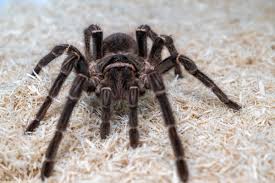
How Do Spiders Spin Webs? A Fascinating Look Into Nature’s Architects
Spiders are among the most fascinating creatures in the animal kingdom. Their ability to create intricate and strong webs has amazed humans for centuries. One of the most common questions people ask is, “How do spiders spin webs?” Understanding this natural engineering marvel not only satisfies curiosity but also highlights the wonders of biology and evolution. In this article, we’ll explore in detail how do spiders spin webs, how do spiders spin silk, and how they manage to build webs across trees, gaps, and open spaces. We’ll also include how do spiders make webs step by step so that both adults and kids can easily understand this process.
Introduction: Why Webs Matter
Spiders belong to the class Arachnida, and most of them use webs for survival. Webs are not just beautiful patterns; they serve multiple purposes such as:
Capturing prey
Providing shelter
Protecting eggs
Helping in movement across open spaces
Before diving deeper into how do spiders spin webs, it’s important to understand that the secret lies in their silk glands, located in the abdomen.
How Do Spiders Spin Webs?
When people wonder, “How do spiders spin webs?”, the answer lies in silk production. Spiders have specialized organs called spinnerets at the back of their abdomen. These spinnerets release silk proteins that harden upon contact with air, creating the threads that form a web.
The process of how do spiders spin webs is guided by instinct. Without any formal training, spiders know exactly how to create geometrically perfect webs. Scientists believe this is due to millions of years of evolution, allowing spiders to perfect this skill for survival.
How Do Spiders Spin Silk?
Another common curiosity is, “How do spiders spin silk?” Silk is produced in liquid form inside the spider’s silk glands. As it passes through the spinnerets, the liquid silk transforms into a solid thread.
Spiders can spin different types of silk for different purposes:
Sticky silk – used for capturing prey.
Non-sticky silk – used for structural support.
Silk for egg sacs – protective silk to safeguard offspring.
Understanding how do spiders spin silk is crucial because silk is not just strong but also flexible. In fact, spider silk is stronger than steel of the same thickness.
How Do Spiders Spin Webs Step by Step?
To better understand how do spiders make webs step by step, let’s break it down:
Anchor Line Creation – The spider releases silk into the air. When the silk catches onto a surface, it forms the first anchor.
Bridge Line Formation – To explain how do spiders spin webs across large gaps, the spider creates a bridge line by letting the wind carry the silk to another surface.
Frame Building – The spider strengthens the outline of the web by adding more silk around the anchor points.
Radial Lines – The spider moves from the center outward, forming straight radial lines like bicycle spokes.
Spiral Construction – Finally, the spider builds a spiral from the inside out, creating a sticky pattern to trap insects.
This systematic approach shows exactly how do spiders make webs step by step without any trial and error.
How Do Spiders Spin Webs Across Large Gaps?
One of the most amazing feats is how do spiders spin webs across large gaps. Spiders rely on the wind to carry a thin strand of silk across the gap. When the strand sticks to another surface, the spider carefully walks across and strengthens it.
This natural engineering marvel explains how do spiders spin webs across open spaces as well. Even when no close surfaces exist, spiders can release silk threads into the wind, allowing them to form bridges that become the foundation of their webs.
How Do Spiders Spin Webs for Kids?
Explaining how do spiders spin webs for kids can be both educational and fun. Kids love to watch spiders in action, and breaking it down simply helps them appreciate nature.
For example, you can say:
Spiders have silk inside their bodies.
They use their back legs to pull out the silk like a thread.
First, they make a straight line (like a rope).
Then, they make a circle and decorate it with sticky silk to catch bugs.
Making this explanation simple is the best way to answer how do spiders spin webs for kids while sparking their interest in science.
How Do Spiders Make Webs?
People often ask, “How do spiders make webs?” The short answer is: spiders use silk from their spinnerets to build strong and organized structures that help them survive.
When exploring how do spiders make webs, it’s important to note that not all spiders make the same kind of web. Some create orb webs, while others make funnel webs, sheet webs, or even trapdoor webs.
How Do Spiders Make Webs Between Trees?
One of the most fascinating abilities is how do spiders make webs between trees. Just like with gaps, spiders let silk float through the air until it attaches to a branch of another tree. Once it does, they cross over and strengthen the silk, repeating the process until a full web is formed.
This natural method is why we often see large webs stretching between tree branches in gardens and forests. Understanding how do spiders make webs between trees gives us insight into how these creatures survive even in wide, open natural environments.
The Science Behind Web Strength
To truly appreciate how do spiders spin webs, one must also understand the incredible strength of spider silk. Research shows that spider silk is five times stronger than steel of the same thickness, yet it is incredibly lightweight.
This is why scientists study how do spiders spin silk to inspire innovations in materials science, including medical sutures, protective clothing, and even aerospace technology.
Why Are Spider Webs So Precise?
Many people wonder how such a small creature can make such geometrically perfect webs. The answer lies in instinct and evolutionary programming. Spiders don’t learn how do spiders make webs step by step from their parents—they are born with the ability coded in their DNA.
This explains why spiders in different parts of the world create similar types of webs without any training.
Fun Facts for Kids About Spider Webs
To make learning about how do spiders spin webs for kids engaging, here are some fun facts:
A spider can rebuild a damaged web in just one night.
Some spiders eat their own webs to recycle the silk.
Webs can be invisible to humans but easily felt by insects.
Not all spiders make webs—some hunt without them.
Conclusion
Spiders are nature’s skilled engineers, and their webs are masterpieces of survival. By understanding how do spiders spin webs, how do spiders spin silk, and how do spiders make webs step by step, we get a glimpse into one of the most fascinating behaviors in the animal kingdom.
Whether it’s how do spiders spin webs across large gaps, how do spiders spin webs across open spaces, or how do spiders make webs between trees, these tiny creatures showcase extraordinary problem-solving skills.
So the next time you see a spider web glistening with morning dew, take a moment to appreciate not just its beauty, but the incredible biological process behind it.

Moonlight Sonata: A Timeless Masterpiece That Continues to Inspire

Why Is One AirPod Louder Than the Other? Complete User-Friendly Guide

How Do Satellites Stay in Orbit? A Complete Guide

☕️The Ultimate Coffee Lover’s Guide: From Caffeine in a Cup of Coffee to Turkish Coffee Delights

In today’s fast‑moving economy, what industry is slowly dying and why?

🐦 The Ultimate Bird Watching Guide: Best Birdwatching Locations & Tips for Beginners
-
 Business7 months ago
☕️The Ultimate Coffee Lover’s Guide: From Caffeine in a Cup of Coffee to Turkish Coffee Delights
-
 Business7 months ago
In today’s fast‑moving economy, what industry is slowly dying and why?
-
 Lifestyle7 months ago
🐦 The Ultimate Bird Watching Guide: Best Birdwatching Locations & Tips for Beginners
-

 Entertainment7 months ago
Black Phone 2′ Cast Revealed: 5 Stars Return, 5 Actors Join & 1 Star Exits
-

 Business8 months ago
The Many Faces of “Future”: Markets, Farming, Music, AI, and a Better Tomorrow
-

 Tech7 months ago
Ultimate Secret Android Apps You’ll Actually Love
-

 Health8 months ago
A Journey Through Life’s Firsts: Health, Gaming, and Experiences That Shape Us
-

 Lifestyle8 months ago
What is life Philosophy?